Diversity, Equity, and Inclusion Newsletter
DEI@Park
Welcome to DEI@Park, the official newsletter for the Office of Diversity, Equity, and Inclusion!
From the Desk of the Director of DEI
What a school year! I have enjoyed learning more and more about the Park community in my first year as DEI Director, and I owe a debt of gratitude for Assiatou’s help with that endeavor. Whether she was organizing Common Bonds, a Partners Breakfast, or talking with students in her office, Assiatou brings a wonderful spirit to Park and an invaluable presence to the office of Diversity, Equity, and Inclusion. Thank you, Assiatou!
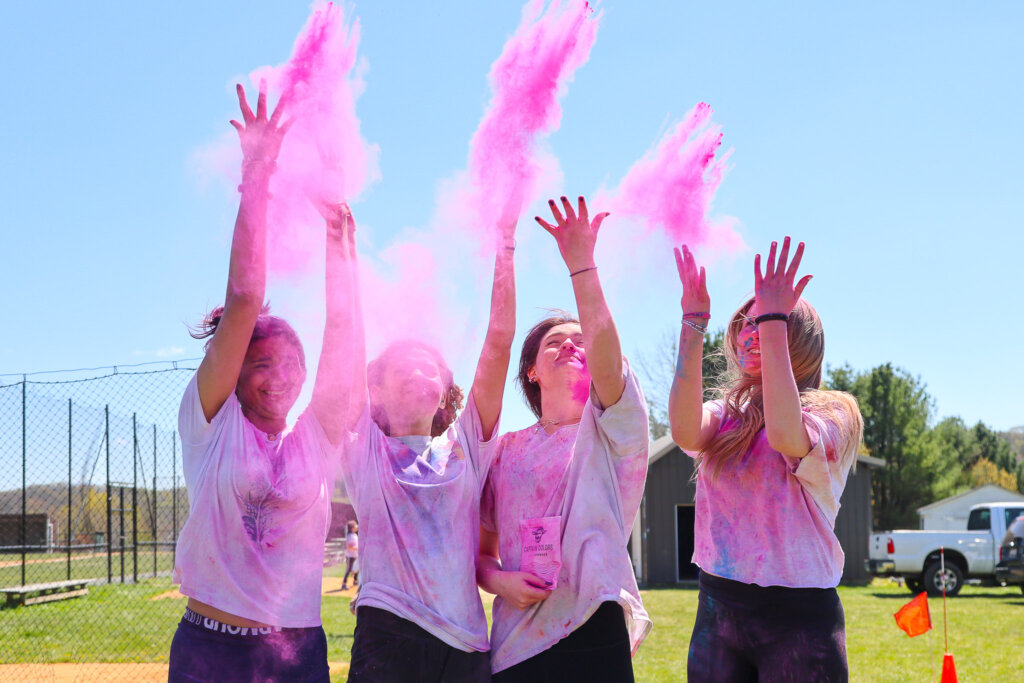
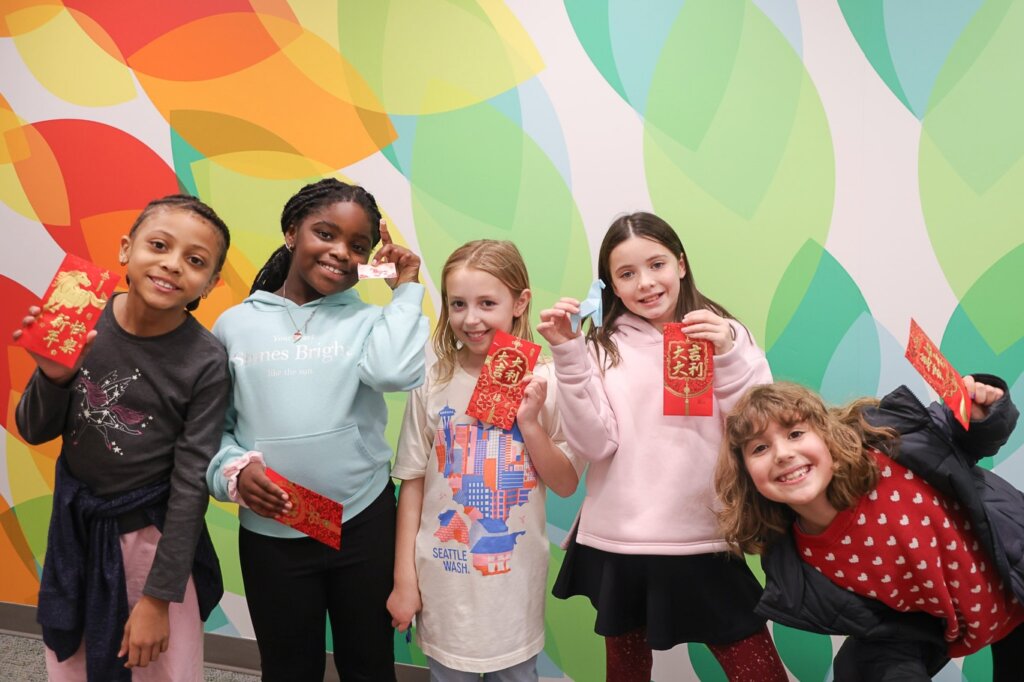
As I continue to interact with students and adults in the community, I am consistently impressed by the thoughtfulness, sensitivity, and kindness I have seen from our youngest learners to faculty, parents, administrators, and alumni. I have appreciated the community spirit that is evident when adults and students alike volunteer to help with events, from Lunar New Year, to our Sukkot Celebration, to the annual Holi Run. Most importantly in the context of the office I serve, Park’s commitment to principles of diversity, equity, and inclusion manifests in classrooms, hallways, curriculum, and many other aspects of life at Park, and I have also experienced Park as a place that lives by one of the more important mantras of DEI work: “The work is never done.” We always will have room to grow, but this edition of DEI@Park chronicles the work we did this year. Enjoy!
—Hayes Davis
Director of Diversity, Equity, and Inclusion
Student Voices
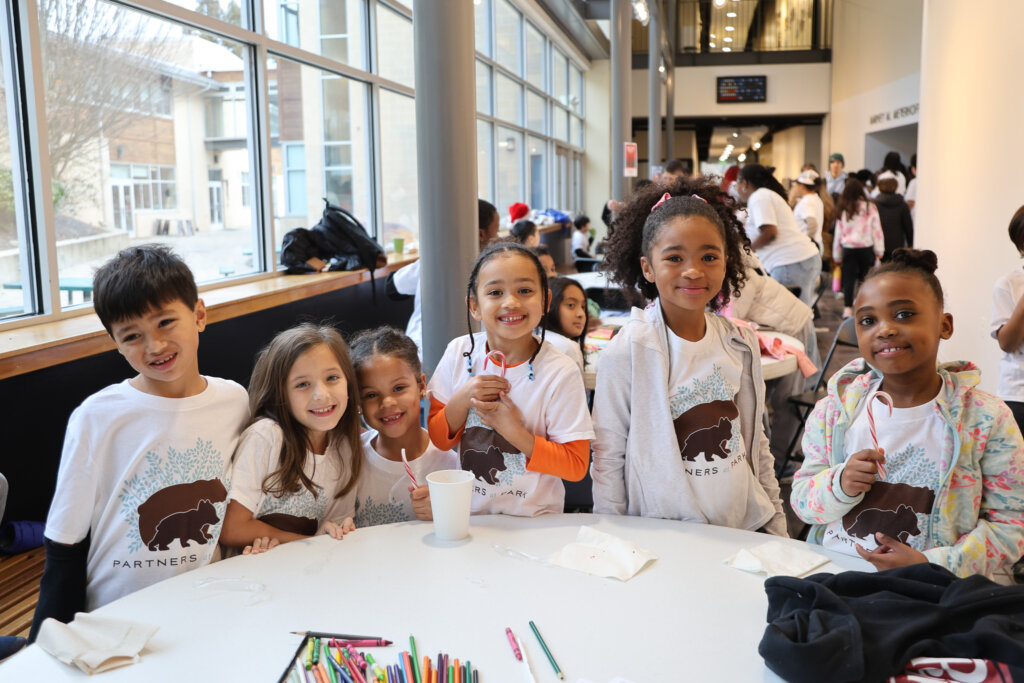
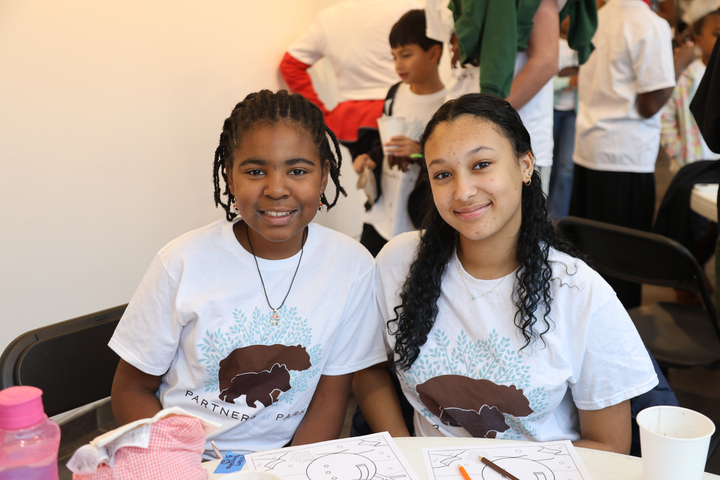
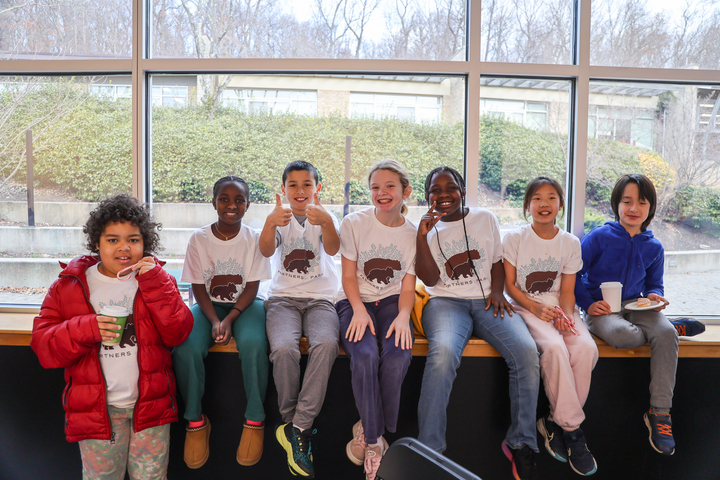
In preparation for this last newsletter of the 2025-26 school year, we reached out to students across divisions and asked them (in developmentally appropriate language), “What have you appreciated about the DEI office’s work this year?”
Common Bonds was great because I got to meet new people and talk with them.”
—Holden, 5th grade
I liked playing games and doing other activities with my [Upper School] partner.
—Veida, 2nd grade
I love the partners program because it allows me to connect with the younger kids at Park; the 1st graders never fail to make me laugh!
—Hayden, 11th grade
I always felt happy when my partner came to visit!
—Emma, 2nd grade
Our affinity lunch was a good size and the conversation was chill.
—Gavin, 3rd grade
I enjoyed my AAA group because not only was I able to advocate for a topic I felt passionate about, but I also had a group of people I could trust. When you’re in a community like this, where there are others who share your interests and want the same thing for you, there’s a special sense of belonging that you may not be able to
find in other places.
—Dani, 6th grade
I like that Upper School Partners make time to come play with us in PE.
—Adam, 4th grade
I like the partners program because it gives me a chance to influence younger people of color like me by giving them a safe space and a role model to look up to.
—Olivia, 11th grade
Divisional Updates
Lower School
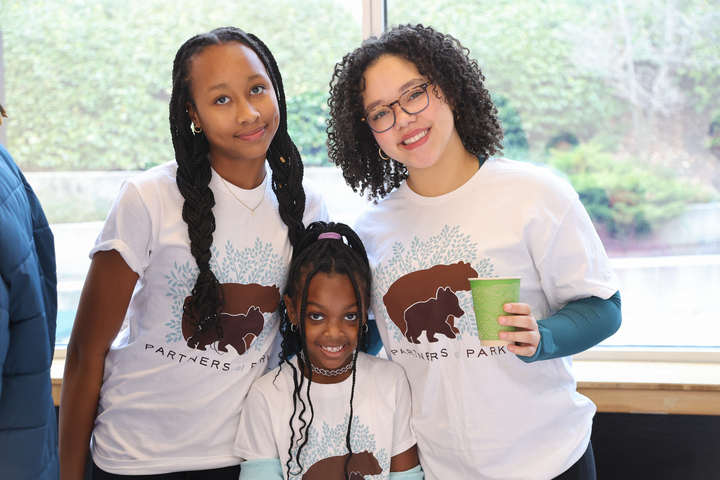
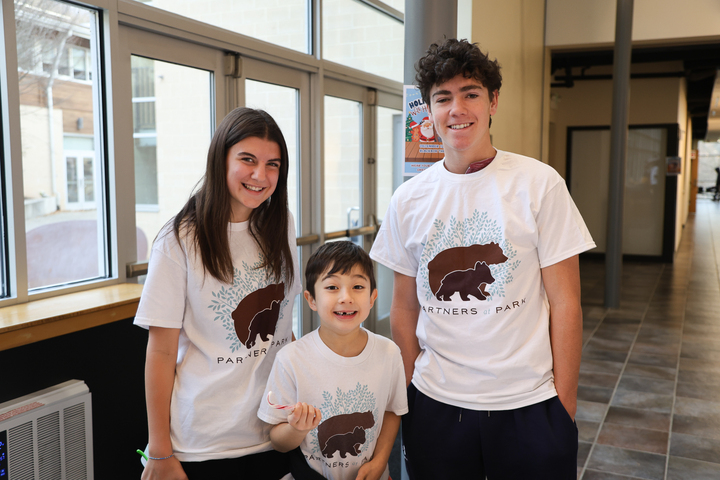
The first month of Lower School is filled with explicit and implicit practices and programming that promote inclusivity and community in the classroom. Through Responsive Classroom practices, students learn how to say each other’s name as they practice greeting each other. Diverse book collections create wonderful windows and mirrors for students during storytime and independent reading. The Partners Program — which launched on Saturday, September 20 and had its first breakfast gathering on Thursday, October 9 — helps students from underrepresented populations connect with Upper School students. Affinity lunches began meeting in early-mid October, and those groups met once a month for the rest of the year. Our first Common Bonds — an afterschool activity period intended to help Lower School students get to know each other — happened on Thursday, October 16, and that program also continued on a monthly basis. Hayes joined Lower School Counselor Amy Ancona as she launched this year’s version of F.U.E.L. (Feelings, Understanding, Empathy, and Learning) with students from Grades 1-5.
Middle School
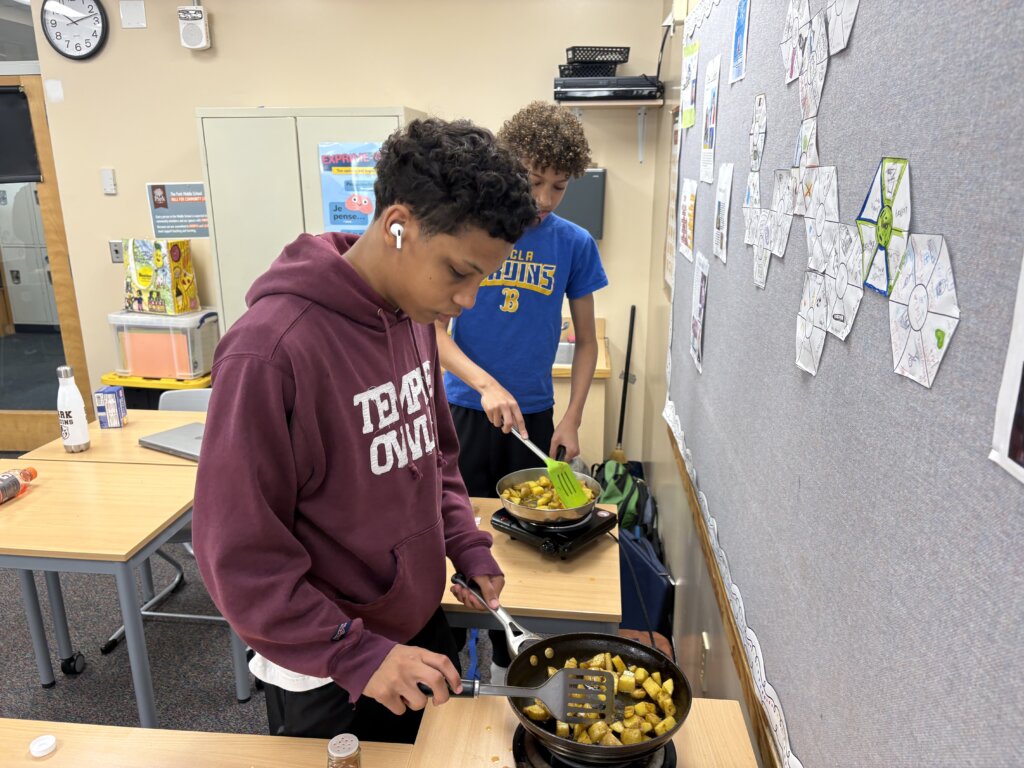
Across 6th, 7th, and 8th Grade, the Middle School curriculum is united by themes of equity, identity, justice, and cultural awareness, with the second semester building on the foundations of the first half of the year. In language arts, students engage with these themes through literature and reflection — 8th Graders analyzed justice and prejudice in To Kill a Mockingbird within its historical context, while 6th Graders explored Black history through weekly video reflections and structured thinking routines. Science and social studies classes challenged students to connect these themes to real-world issues, with 7th Graders investigating environmental racism and Maryland’s energy future, and all grades examining current events through lenses of equity and active citizenship. World language classes in both French and Spanish deepen cultural understanding by exploring food, identity, and the legacies of colonization across French- and Spanish-speaking cultures worldwide, including a focus on Afrolatinidad. Human Sexuality 7 extends this exploration inward, helping students examine how diverse identities shape individual and community well-being. These threads are further reinforced through monthly cultural displays and student-led assemblies. Together, the curriculum and co-curricular efforts reflect a schoolwide commitment to developing empathetic, globally minded, and critically engaged young people.
Upper School
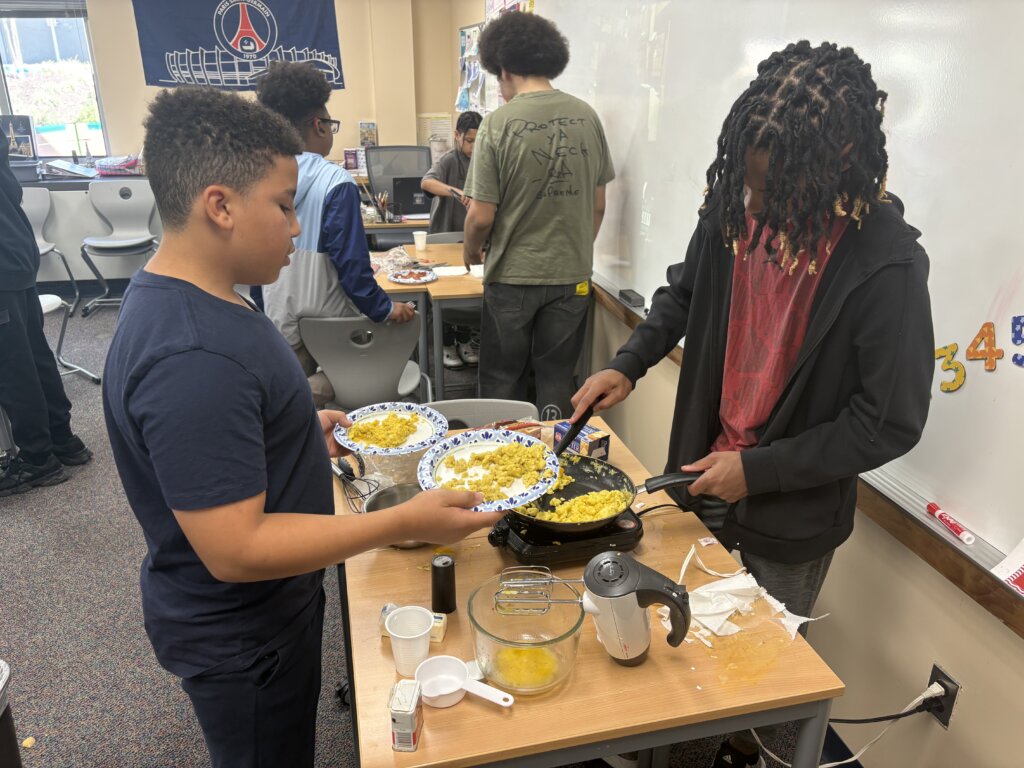
In the Upper School, diversity, equity, and inclusion are woven into both dedicated programming and everyday curricular work. Each grade level engages with DEI themes through Monday M block classes tailored to their stage of development: 9th Graders explore how family and religious backgrounds have shaped their values, while 10th Graders build on those conversations by proposing concrete ways to strengthen community at Park. Eleventh graders spent the first semester developing skills for having productive conversations across disagreement, and 12th Graders have been reflecting on how their understanding of identity will travel with them into life after graduation. Beyond these dedicated classes, Upper School students are engaging with history, culture, and identity through a range of thought-provoking electives. In the Spanish elective Decolonizing Food, seniors examined the indigenous and African roots of Latin American cuisine through research, discussion, and documentary film. In the English elective Downtown Scene, students explored the AIDS epidemic of the 1980s through Larry Kramer’s The Normal Heart, considering its impact on the queer community and on evolving models of care. In the history elective Race and Racism in Global Context, students studied the history of racialization and culminated the course by researching and advocating for pathways toward liberation, including reparations, truth and reconciliation, decolonization, mutual aid, and affirmative action. The spring semester has also brought a series of vibrant cultural celebrations and Heritage Month recognitions. The Black Student Union presented a multimedia assembly for Black History Month centered on the theme of Black Baltimore, offering the community a detailed and informative exploration of local history. In February, the Jewish Canadian Youth Model UN hosted a Challah bake to support student participation in the JCYMUN conference in March. Upper School students also contributed to the school-wide Lunar New Year celebration, sharing personal testimonials, demonstrating martial arts and dance, and leading guests through cultural traditions and games. Together, these experiences reflect the Upper School’s commitment to helping students understand themselves and the world with curiosity, empathy, and depth.
Professional Development Corner
Professional Development for teachers is one of the most important responsibilities of a DEI program. Our office offers faculty meeting workshops in each division four times during the school year. After meeting with our Lower, Middle, and Upper School Principals over the summer, Hayes worked with the divisional coordinators to develop a scope and sequence for how we would help teachers grow this year, and planned each workshop alongside those coordinators. Below is a list of PD sessions we have done with each division since late August, and upcoming engagements.
Lower School
- The Power of Our Language in Transition Meetings
- The Power of Our Language in the Classroom
- The Language of Our Teaching Spaces & Hallways
- The Language of Our Classroom Book Collections
Middle School
- Understanding our Identity
- Identity & Our Students: Creating Connections Across Difference
- Weight of Words Advisory Lesson Preparation
- Creating Connections Across Difference Pt. 2
Upper School
- Teaching a DEI section
- Intervening when We Hear Challenging Language
- Writing Away from Bias
- Grading Away from Bias
Essay
Those Winter Sundays Essay Series
1.2 The Danger of a Single Story
Hello again, and thank you for clicking the link that brought you to this, my second essay about the intersection of poetry and diversity, equity, and inclusion principles. The first essay, a close reading of Robert Hayden’s “Those Winter Sundays,” examined the power of perspective and how revisiting a memory can introduce us to new reflections on that memory. I am borrowing today’s title from author Chimamanda Ngozie Adichie, whose 2009 TED Talk of the same name argues that applying a limiting narrative to a person or place can flatten or obfuscate our beautifully complicated humanity. We’ll be doing a close reading of “Duty” by former United States Poet Laureate Natasha Trethewey.
In the poem, the speaker listens as her father retells a familiar story. Ending the first line with the word “now” emphasizes that familiarity, and the second line fully centers the father in the story of protecting the speaker while ensuring that both of them survive the harrowing experience of a hurricane that floods the family’s home. While recounting the story, the speaker in the poem ruminates on who is not part of her father’s tale. Trethewey composes the poem in couplets, two-line stanzas that mirror the story populated only by her father and her:
When he tells the story now
he’s at the center of it,
everyone else in the house
falling into the backdrop—
my mother, grandmother,
an uncle, all dead now, props
in our story: father and daughter
caught in memory’s half-light…
I read “memory’s half-light” as a simultaneous nod to the way years can fade the sharpness of a memory and a recognition that the father’s narrative is incomplete. In the next stanza, the speaker admits that age limits her memory — “I’m too young to recall it,/so his story becomes the story” — before repeating her father’s retelling. The speaker notes that the hurricane was 1969’s Hurricane Camille, “bearing down, the old house//shuddering as if it would collapse./Rain pours into every room,” mentioning that her father had to keep moving in order to “keep me out of harm’s way—/a father’s first duty: to protect.” I have often told my own children that my first job is to keep them safe and my second is to feed them, so I feel the father’s fear acutely as he carries the speaker’s younger self:
I am small in his arms, perhaps
even sleeping. Water is rising
around us and there is no
higher place he can take me
than this, memory forged
in the storm’s eye: a girl
Clinging to her father. What
can I do but this? Let him
tell it again and again as if
it’s always been only us,
and that, when it mattered,
he was the one who saved me.
Trethewey’s complicated relationship with these memories feeds the poem’s tension, and the father’s omission of family members who shared the flood experience is made more complicated by the fact that Trethewey is a Biracial Black woman. Her father is white, and leaving his Black wife, mother-in-law, and brother-in-law out of the story carries a different weight, his omission of people of color from the narrative reflecting an unfortunate trend in some other retellings of history.
Only recently have some independent schools begun to teach the history of the African Continent before colonialism, or de-centered Europe in World history classes. In spite of those advances, recent attempts to sanitize America’s history and erase public acknowledgments of the contributions of non-white people are depriving some citizens of a fuller understanding of our country. As you move through your own lives, consider the narratives you hear and who tells them. How can you recognize the humanity of people who may have been flattened by a single story — for example, about certain neighborhoods or segments of the population with whom you do not have consistent contact? How can you encourage friends and family to do the same?
— Hayes Davis